
8 Pool Design Trends Transforming Modern Swimming Pools in 2026
The biggest pool design trends in 2026 center on blurring the line between built and natural water: zero-entry “beach” pools, saltwater and naturally filtered systems, vanishing infinity edges, sun shelves, architectural decking, and statement mosaic tilework — all increasingly shaped by sustainable engineering and dramatic after-dark lighting. Below is how each trend works and why it matters.
What are the biggest pool design trends?
- Zero-entry pools — gradual, beach-style sloped entries that replace traditional steps.
- Natural & saltwater pools — gentler water through salt chlorination or plant-based filtration.
- Infinity edges — horizon-blending edges that merge the pool with the view.
- Sun shelves — shallow lounging ledges for chairs, kids, and half-submerged relaxing.
- Architectural decking — large-format pavers and flush transitions that treat the deck as design, not afterthought.
- Mosaic tilework — hand-laid glass and stone in oceanic tones that define a pool's color.
- Sustainable design — solar heating, efficient pumps, and reduced water and chemical use.
- Dramatic lighting — layered LED and fiber-optic effects that extend a pool's life after sunset.
Each is explored in detail below.
1. Zero-entry (beach-entry) pools
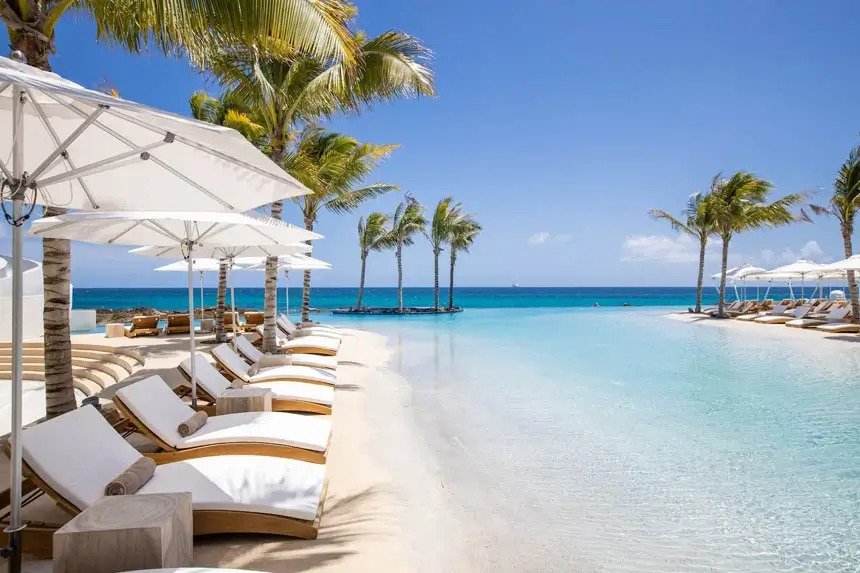
A zero-entry pool — also called a beach-entry pool — has no steps or ladder at its shallow end. Instead, the floor slopes gradually from the deck down into the water, mimicking the way you'd wade into the ocean from a shoreline.
The appeal is part practical, part emotional. The gentle grade makes the pool genuinely accessible: easy for small children, older swimmers, and anyone using mobility aids, with no awkward first step into deep water. It also creates a warm, shallow lounging zone perfect for a chair, a toddler, or simply lying half-submerged in the sun.
For saltwater enthusiasts, the trend is a natural fit. Pairing a beach entry with a salt-chlorinated system recreates the sensation of walking into the sea — softer water underfoot and a shoreline-style approach — without leaving the backyard.
2. Natural & saltwater pools
The clearest movement in residential pools is away from heavily chlorinated water toward gentler alternatives. This is the heart of what Saltwater Wanderer celebrates, and it's worth understanding the two main approaches.
Saltwater pools don't replace chlorine so much as generate it differently. A salt-chlorine generator converts dissolved salt into a steady, low-level supply of chlorine, producing water that feels softer on skin and eyes, with no sharp chemical smell and far less hands-on chemical management. The salinity is roughly a tenth of seawater — present enough to notice, gentle enough to be pleasant.
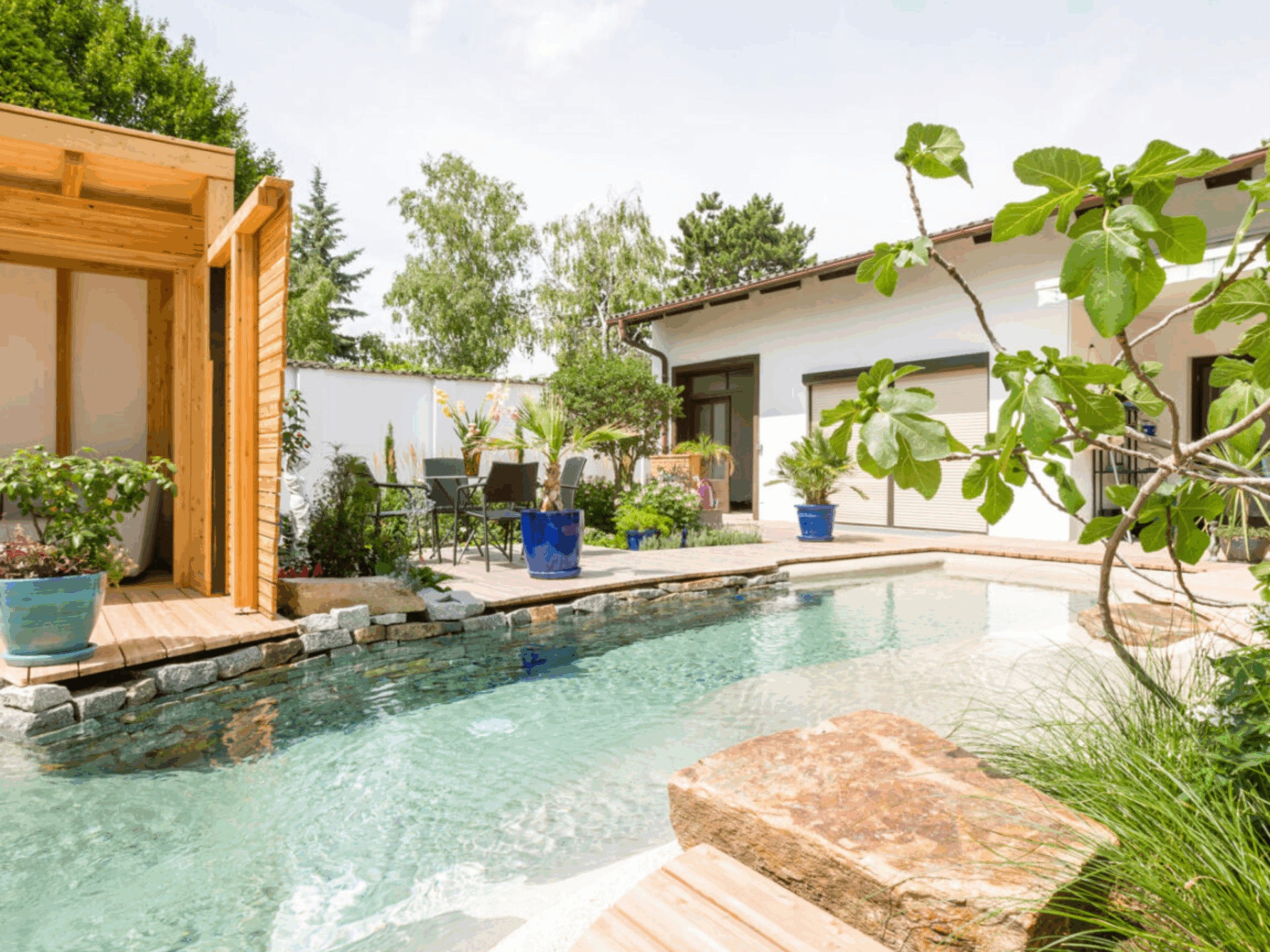
Natural swimming pools go a step further, using plants and biological filtration zones instead of chemicals entirely. A regeneration area filters and cleans the water through aquatic plants and gravel beds, so the swimming zone stays clear while the whole system reads as a living pond. They demand more space and thoughtful design, but reward you with a chemical-free swim and a habitat that changes with the seasons.
Both reflect the same instinct driving the rest of this list: water that feels closer to the real thing.
3. Infinity & vanishing edges
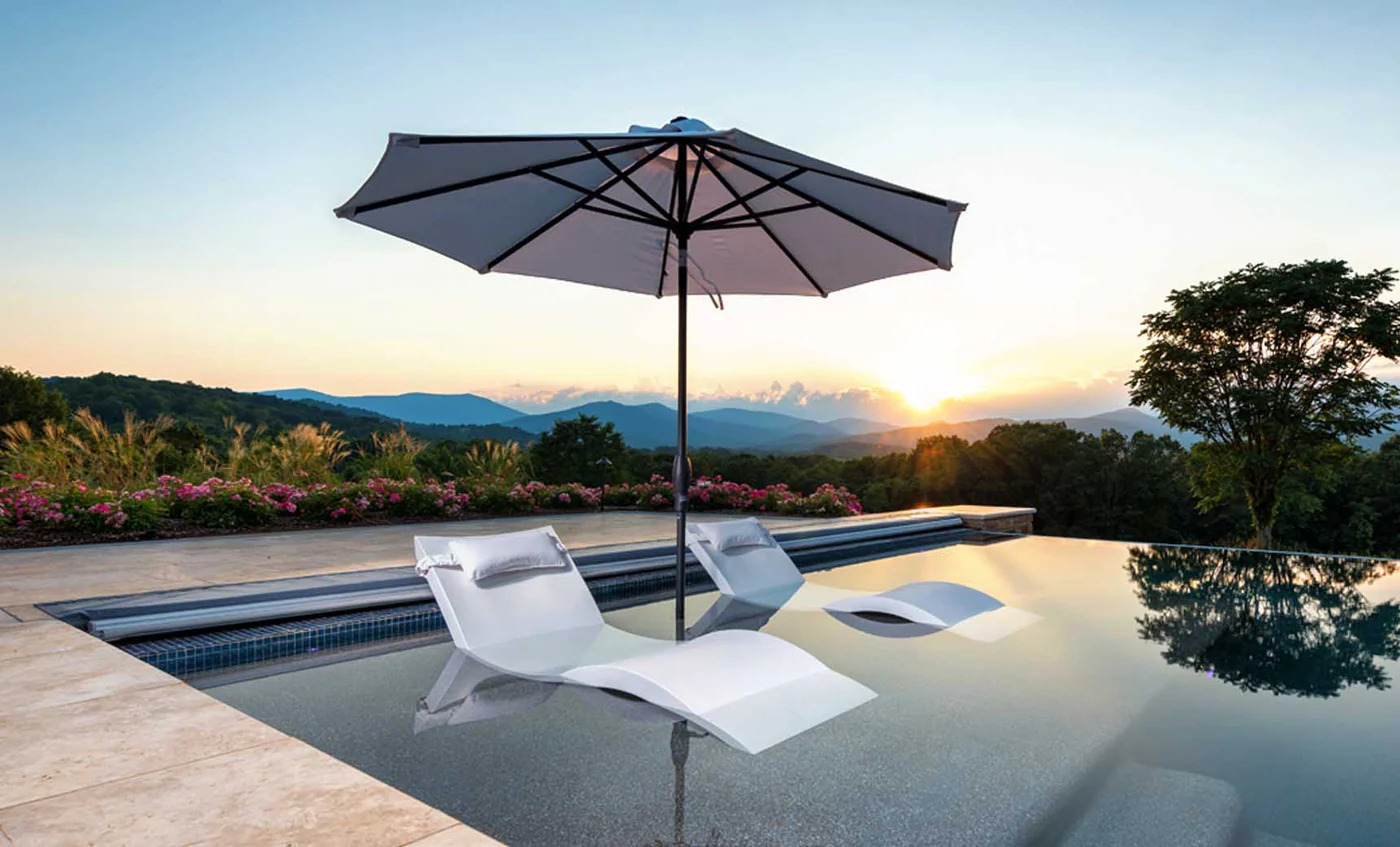
An infinity edge — also called a vanishing or negative edge — is a wall built fractionally below the waterline so water spills over it into a hidden catch basin and is recirculated. The effect erases the pool's boundary, so the surface appears to merge seamlessly with the ocean, a valley, or the horizon beyond.
The trend rewards a view. On a hillside or oceanfront site, a vanishing edge turns the pool into a reflective foreground that draws the eye outward rather than stopping it at a coping stone. It's an engineering investment — the catch basin, weir wall, and pump capacity all have to be precise — but few features deliver as much drama for the footprint.
4. Sun shelves & tanning ledges
A sun shelf — also known as a tanning ledge, Baja shelf, or pool ledge — is a wide, shallow platform set just a few inches below the waterline. It has become one of the most requested features in modern pool design, and for good reason.
The shelf creates a dedicated zone for relaxing rather than swimming. At four to twelve inches deep, it's ideal for half-submerged lounge chairs, a spot to cool off without fully getting in, and a safe, supervised play area for small children. Many designs add a bubbler or small fountain for movement, or an umbrella sleeve so you can stake shade right in the water.
It pairs especially well with the zero-entry trend: the gradual beach entry flows naturally into a tanning ledge, giving a pool two distinct shallow zones before the floor ever drops to swimming depth.
5. Architectural decking
Decking has graduated from a surround to a statement. The current direction treats the area around the pool as an extension of the home's architecture rather than a strip of concrete.
Large-format porcelain pavers lead the way: their wide planks and minimal grout lines read as clean and contemporary, and the same material can flow from indoor living space straight out to the waterline for a continuous indoor-outdoor surface. Sustainably sourced hardwoods bring warmth and texture where a softer look is wanted. And flush, level transitions — where deck meets water with no raised lip — reinforce the seamless, modern aesthetic that ties this trend to the vanishing edge above.
6. Mosaics & statement tilework
After years of plain plaster and solid liners, detailed mosaic tile is firmly back. Hand-laid glass and stone tiles let designers control a pool's color with real precision — and oceanic palettes dominate, from deep lagoon blues to shifting greens that catch the light differently through the day.
Beyond color, mosaics add craft. A patterned waterline band, a tiled feature wall, or a fully clad interior turns the pool surface itself into a focal point. Glass tile in particular plays with light underwater, giving even a still pool a sense of depth and movement.
7. Sustainable & energy-efficient design
Sustainability has shifted from a nice-to-have to a core design driver, and it dovetails naturally with the saltwater and natural-pool ethos.
Key moves include solar heating to extend the swimming season without a utility spike, variable-speed pumps that draw a fraction of the energy of older single-speed models, and natural or salt-based filtration that cuts chemical inputs. Water-saving measures — covers that reduce evaporation, efficient backwashing, and rainwater integration — round out the picture, along with eco-conscious decking and tile materials. The throughline is simple: a beautiful pool that costs less to run and treads more lightly.
8. Dramatic lighting
Lighting is where a pool earns its evenings. Modern LED systems offer full-color control, letting owners shift a pool from crisp daylight white to deep ocean blue or warm amber at the touch of a phone.
The best installations layer their light. Underwater accent fixtures wash the interior tile and reveal its color after dark; fiber-optic “starlight” effects can be set into steps or the pool floor; and perimeter and landscape lighting frame the deck and surrounding plants. Done well, lighting roughly doubles a pool's usable hours and transforms the entire space into something atmospheric once the sun goes down.
How to choose the right trend for your climate & site
No single trend suits every property — the right combination depends on your conditions.
Consider your climate first: solar heating and natural pools thrive in temperate-to-warm regions, while colder climates may lean harder on efficient heating and covers. Weigh your site and view — infinity edges and architectural decking pay off most on a slope or with a horizon to borrow, whereas a flat suburban lot may favor a zero-entry layout and statement tilework. Factor in maintenance appetite: saltwater systems reduce daily chemical work, while natural pools trade chemicals for seasonal plant care. Finally, set a realistic budget — vanishing edges and full mosaic interiors sit at the premium end, while a salt conversion or LED upgrade delivers a noticeable change for far less.
When in doubt, start with the trend that most changes how the water feels — usually a saltwater or natural system — and build the visual choices around it.
Frequently asked questions
What is a zero-entry pool?
A zero-entry pool, or beach-entry pool, has a floor that slopes gradually from the deck into the water with no steps or ladder, recreating the experience of wading into the ocean from a shoreline. It's prized for accessibility and for the shallow lounging zone it creates.
What is a sun shelf or Baja shelf?
A sun shelf — also called a tanning ledge, Baja shelf, or pool ledge — is a wide, shallow platform a few inches below the waterline, designed for lounging rather than swimming. It typically sits four to twelve inches deep, making it ideal for in-water chairs, cooling off, and supervised play for small children.
Are saltwater pools better than chlorine pools?
Saltwater pools still use chlorine — they generate it from salt rather than dosing it manually — which produces softer-feeling water, no harsh chemical smell, and less hands-on maintenance. Traditional chlorine pools have lower upfront costs and simpler equipment. “Better” depends on your priorities: water feel and low maintenance favor saltwater; budget and simplicity can favor chlorine.
What is the best decking material for around a pool?
Large-format porcelain pavers are the leading choice in 2026 for their clean look, slip resistance, and ability to flow seamlessly from indoors to the waterline. Sustainably sourced hardwoods are a strong alternative where warmth and texture are preferred. The best choice balances your climate, aesthetic, and barefoot comfort.
How much do these pool designs cost?
Costs vary widely by region, size, and feature set. Simpler upgrades like a salt-chlorine conversion or LED lighting are relatively affordable, while infinity edges, natural filtration systems, and full mosaic interiors sit at the premium end. Always get site-specific quotes from local builders.
Explore pools that bring these trends to life
Every trend here is on display somewhere in the world right now — in saltwater lagoons, beach-entry resort pools, and vanishing-edge stunners perched above the sea. Browse the Saltwater Wanderer directory to find them, and subscribe for new pools added every week.
What, exactly, is a saltwater pool?
→The Poolside Digest, monthly.
One short letter a month — new pools, new essays, and places worth swimming.
No spam, unsubscribe anytime.